
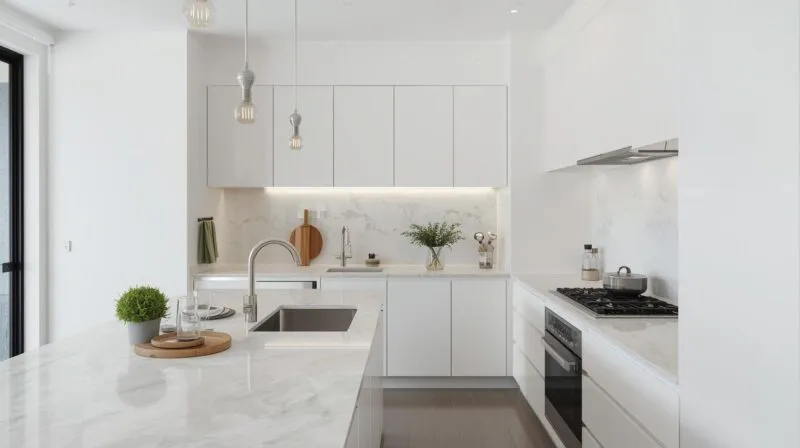
Modern kitchen style relies on carefully chosen colors, layered textures, and quality finishes that balance aesthetic appeal with practical durability. Success comes from understanding how these elements interact and selecting materials that will age gracefully in Australian conditions.
Understanding Modern Kitchen Style
Modern kitchen style emphasizes clean lines, minimal ornamentation, and thoughtful material selection. This approach originated from early 20th-century modernist principles. Form follows function. Unnecessary decoration is eliminated. Materials showcase their inherent properties.

In Australian homes, modern style has evolved. It now accommodates our climate and lifestyle. The result is spaces that feel serene and organized. They remain effortlessly sophisticated while supporting real daily use.
Modern Color Palettes That Endure
Neutral Foundations
Modern kitchens typically build from neutral foundations. Whites, grays, and earth tones provide versatility. These base colors allow architectural elements to shine. Natural light becomes a design feature. Visual competition is minimized.
Neutral doesn’t mean boring. Subtle differences between warm and cool whites create depth. Gray tones offer endless variation. Earth-based neutrals provide richness. The restraint itself defines modern sophistication.
Monochromatic Schemes
Many successful modern kitchens employ monochromatic approaches. Varying textures and finishes within one color family create interest. This maintains visual calm while adding sophisticated depth.

Consider how natural light changes throughout the day. Materials that look perfect in morning light might feel different in afternoon sun. Test samples in your actual space before committing.
Strategic Color Accents
When color appears in modern kitchens, it does so thoughtfully. A single accent wall might provide personality. Colorful splashbacks can make statements. Statement islands offer opportunities for contrast.
Modern design favors sophisticated colors over bright primaries. Think sage greens, deep blues, or warm charcoals. These choices feel intentional rather than trendy.
For inspiration on how color works in modern spaces, explore our gallery of modern kitchens to see expert color application in Sydney homes.
Texture in Modern Kitchens
Layering Different Textures
Modern design’s simplicity requires textural interest. Without pattern or ornamentation, texture provides depth. The interplay between different surfaces creates visual richness.
Imagine matte cabinetry against polished stone benchtops. Consider textured timber accents contrasting with smooth concrete floors. These material conversations define modern sophistication.
Balancing Smooth and Textured Surfaces
Too much smoothness feels sterile. Too much texture becomes busy. Modern kitchens balance these extremes. Smooth surfaces dominate for clean aesthetics. Textured elements add warmth and interest.

Natural materials bring inherent texture. Timber grain provides subtle variation. Stone surfaces display geological patterns. These organic textures feel authentic and grounding.
Matte vs Gloss Finishes
Matte finishes dominate modern aesthetics currently. They reduce reflective glare. Fingerprints show less. The subtle sophistication appeals to many homeowners.
Gloss finishes can work in modern kitchens. They reflect light effectively. Small spaces benefit from this reflectivity. However, maintenance requirements increase. Fingerprints and smudges become more visible.
Consider mixing matte and gloss strategically. Perhaps matte cabinetry with gloss splashbacks. This combination provides visual interest while maintaining clean lines.
Cabinetry Finishes for Modern Style
Painted Finishes
Painted cabinetry offers ultimate color flexibility. Polyurethane finishes provide durability. They resist moisture and daily wear. Color consistency across all surfaces is achievable.
Matte and satin sheens suit modern aesthetics best. They highlight construction quality. Imperfections show less than with gloss. The subtle finish feels contemporary and refined.
Wood Grain and Veneer
Natural timber brings warmth to modern kitchens. Wood grain provides organic texture. This prevents spaces from feeling cold or clinical.
Timber veneers offer consistency. Grain patterns can be matched across surfaces. Modern joinery techniques create seamless appearances. The natural material feels authentic and grounding.

Laminate Options
Modern laminates have evolved significantly. High-quality options replicate natural materials convincingly. They offer excellent durability at accessible price points.
Textured laminates add depth. Woodgrain patterns bring warmth. Solid colors provide clean backdrops. Maintenance requirements remain minimal.
Handleless Systems
Handleless cabinetry epitomizes modern aesthetics. Push-to-open mechanisms maintain clean lines. Integrated finger pulls disappear into surfaces. The result feels seamless and architectural.
Quality hardware matters enormously here. Soft-close mechanisms should operate smoothly. Alignment must be precise. When surfaces are simple, execution quality becomes immediately visible.
Benchtop Materials and Finishes
Engineered Stone
Engineered stone dominates modern kitchens. Consistency across large slabs is achievable. Color and pattern remain uniform. Durability exceeds many natural alternatives.
Finishes range from polished to honed. Polished surfaces reflect light dramatically. Honed finishes feel more subtle. Both resist staining and heat effectively.
Porcelain Slabs
Porcelain technology has advanced remarkably. Large format slabs create seamless surfaces. Minimal grout lines maintain clean aesthetics. Durability in Australian conditions is excellent.
Porcelain can replicate marble, concrete, or timber. The performance exceeds natural materials. Heat resistance is exceptional. Stain resistance simplifies maintenance.

Natural Stone
Natural stone provides unique character. No two slabs match exactly. Geological patterns tell stories. This authenticity appeals to many homeowners.
Marble offers classic elegance. Granite provides distinctive patterns. Each requires specific maintenance. Sealing schedules must be maintained. The effort rewards you with timeless beauty.
Concrete and Solid Surface
Concrete benchtops suit industrial-modern aesthetics. Custom colors are achievable. The material feels substantial and authentic. Sealing requirements are significant.
Solid surface materials offer seamless integration. Sinks can be integrated invisibly. Repairs are possible if damage occurs. The uniform appearance suits modern principles.
Hardware and Metal Finishes
Integrated and Minimal Hardware
Modern kitchens minimize visible hardware. Integrated pulls disappear into cabinetry. Recessed handles maintain clean lines. The architecture itself becomes the focus.
When hardware appears, it should feel intentional. Linear pulls suit modern proportions. Simple knobs provide subtle detail. Scale must match cabinetry dimensions.
Coordinating Metal Finishes
Metal finishes should coordinate throughout. Mixing warm brass with cool stainless requires careful consideration. Proportions and placement matter significantly.

Matte black remains popular. Brushed stainless offers timeless appeal. Aged brass brings warmth. Chrome provides crisp modernity. Choose one primary finish and commit.
Tapware Selection
Tapware significantly impacts modern aesthetics. Clean geometric forms work best. Avoid ornate or traditional profiles. The fixture should feel architectural.
Finishes should match other hardware. Functionality matters as much as appearance. Quality mechanisms ensure smooth operation. Poor tapware undermines entire kitchen quality.
Splashback Options and Finishes
Continuing Benchtop Material
Many modern kitchens continue benchtop material as splashback. This creates seamless vertical surfaces. Visual breaks are minimized. The effect feels cohesive and calm.
Large format slabs make this approach practical. Minimal seams maintain clean lines. The investment increases but visual impact justifies cost.
Large Format Tiles
Large tiles with minimal grout suit modern aesthetics. Grout lines interrupt clean surfaces. Larger tiles mean fewer interruptions. The result feels more architectural.

Porcelain tiles offer excellent performance. Colors coordinate with other finishes. Textures can add subtle interest. Maintenance remains straightforward.
Glass Splashbacks
Glass splashbacks provide seamless surfaces. No grout lines exist. Cleaning becomes simple. Color options are virtually unlimited.
Back-painted glass offers uniform color. Mirrored glass reflects light effectively. Textured glass adds subtle interest. All options maintain modern simplicity.
Flooring Finishes That Ground Modern Style
Timber and Timber-Look Options
Wide-plank flooring suits modern aesthetics. Natural timber brings warmth. Grain patterns provide organic texture. The material ages gracefully.
Timber-look porcelain offers practical alternatives. Appearance closely replicates natural wood. Durability exceeds genuine timber. Maintenance requirements decrease significantly.

Concrete and Polished Finishes
Polished concrete suits industrial-modern styles. The material feels substantial. Thermal mass benefits suit Australian climate. Maintenance remains relatively simple.
Sealing schedules must be maintained. Surface preparation affects final appearance. Professional installation is essential. The investment delivers distinctive character.
Stone and Tile
Natural stone flooring provides timeless appeal. Limestone and travertine offer subtle texture. Slate brings dramatic character. Each requires specific maintenance.
Large format porcelain tiles replicate natural materials. Performance exceeds originals. Slip resistance can be engineered. The practical benefits are significant.
Lighting and Finish Interaction
How Light Affects Materials
Natural and artificial light dramatically affect finishes. Matte surfaces absorb light. Gloss surfaces reflect it. This interaction shapes spatial perception.
Consider light direction and intensity. Morning light differs from afternoon sun. Artificial lighting creates different effects. Test materials under various conditions.

Layered Lighting Design
Modern kitchens require multiple lighting types. Ambient lighting provides overall illumination. Task lighting brightens work areas. Accent lighting highlights materials.
Each layer should be independently controllable. Dimmable systems allow mood adjustment. The right lighting showcases your finish selections beautifully.
Durability Considerations for Australian Conditions
Climate-Appropriate Materials
Sydney’s climate influences material selection. Humidity affects certain finishes. Heat impacts others. UV exposure fades some materials.
Choose finishes that withstand local conditions. Quality matters more than appearance alone. Materials should maintain beauty despite environmental stress.
Heat and Moisture Resistance
Kitchens experience temperature extremes. Steam from cooking creates humidity. Benchtops encounter hot cookware. Materials must handle these conditions.

Engineered materials often outperform natural alternatives. Technology delivers superior performance. The aesthetic compromise becomes minimal with modern options.
UV Stability
Australian sun is intense. UV exposure fades some finishes. This particularly affects areas near windows. Choose materials with proven UV stability.
Quality finishes resist fading. Cheaper alternatives deteriorate quickly. The investment in quality pays dividends over time.
Working with Modern Kitchen Specialists
Professional Finish Selection
Selecting finishes requires expertise. Professionals understand material interactions. They know which combinations work. Experience prevents costly mistakes.
Samples show only small sections. Professionals envision complete installations. They understand how finishes will age. This knowledge proves invaluable.
The Wonderful Kitchens Advantage
With more than 40 years of Sydney experience, Wonderful Kitchens brings deep finish expertise. Our custom manufacturing provides unique insights. We understand how materials perform long-term.
Our two Sydney showrooms showcase finish options. You can experience materials firsthand. See how different finishes interact. Understand maintenance requirements before committing.
We work with materials suited to Australian conditions. Our suppliers provide proven quality. Local manufacturing ensures precise execution. Quality control remains consistent throughout.
Visit our Sydney kitchen showrooms to experience modern finishes in person. See how colors, textures, and materials work together. Our designers provide honest guidance based on your specific needs.
Create Your Modern Kitchen with Expert Guidance
Ready to explore modern kitchen colors, textures, and finishes? Book a design consultation to discuss your project. Our team brings decades of modern design expertise. We’ll help you create a kitchen that looks stunning today and remains beautiful for years to come.
Frequently Asked Questions
What colors work best for modern kitchen style?
Modern kitchen style favors neutral foundations like whites, grays, and earth tones that provide timeless versatility. Monochromatic schemes create depth through varying textures within one color family. Strategic accent colors like sage green, deep blue, or warm charcoal add personality without overwhelming the clean aesthetic.
Which finishes are most durable for modern kitchens in Australia?
Engineered stone and porcelain benchtops offer excellent durability in Australian conditions with superior heat and UV resistance. Matte polyurethane cabinetry finishes resist moisture and daily wear while hiding fingerprints. Quality laminates and properly sealed natural materials also perform well when chosen specifically for local climate considerations.
How do I choose between matte and gloss finishes?
Matte finishes dominate modern aesthetics currently, reducing glare and showing fewer fingerprints. Gloss finishes reflect light effectively and suit small spaces but require more maintenance. Consider mixing both strategically—perhaps matte cabinetry with gloss splashbacks—to create visual interest while maintaining clean lines.
What textures work in modern kitchen style?
Modern kitchens balance smooth and textured surfaces for visual interest without ornamentation. Combine matte cabinetry with polished stone benchtops, or pair smooth concrete floors with textured timber accents. Natural materials like wood grain and stone provide organic texture that prevents spaces from feeling cold or clinical.
How do I maintain modern kitchen finishes long-term?
Different finishes require different care levels. Matte surfaces hide marks better than gloss. Some materials need regular sealing while others remain maintenance-free. Choose finishes that age gracefully and develop patina rather than deteriorating. Quality finishes resist fading from Australian UV exposure and maintain appearance despite heat and humidity.